The Consortium for Ecological Law is leading and supporting young professionals to engage in international environmental policymaking at the upcoming IUCN World Conservation Congress in Abu Dhabi in October 2025.
The Consortium’s leadership participated in the IUCN Congress as members of the GCELS of the Elisabeth Haub School of Law at Pace University.
Online participants included Prof. Nicholas A. Robinson (the Consortium’s President), the late Prof. Richard L. Ottinger (the Consortium’s Vice President), while Prof. Victor M. Tafur (the Consortium’s Executive Director) and Prof. Shakeel Kazmi (Member of the Consortium’s Board of Directors and Treasurer) attended in person.
- Dates: October 9-15, 2025
- Location: Abu Dhabi
The Consortium empowered young professionals to take an active role in the Congress with a grant to the GCELS to support in person participation. The cohort comprised current students and recent graduates of Pace Haub’s Juris Doctor and Master of Laws programs. The young professionals worked on motions addressing a variety of environmental issues to advance Ecological Law.
The Consortium grant funding supported 11 GCELS Staff Interns’ registration for the WCC, with 10 attending in person and 1 participating online. The grant also covered travel expenses for 9 of the in person delegates.
§ Highlight of CEL’s Impact and Events in 2025: Advancing Youth Engagement in Global Environmental Governance at the IUCN World Conservation Congress
-By Victoria Sawchuk – J.D. Candidate, Class of 2026, Elisabeth Haub School of Law at Pace University, Global Center for Environmental Legal Studies (GCELS), Promotions Editor, Pace Environmental Law Review
Between October 8-16, 2025, the Consortium for Ecological Law’s (CEL) Board Members attended the International Union for the Conservation of Nature’s (IUCN) World Conservation Congress in Abu Dhabi, United Arab Emirates. The Congress is one of the most influential global forums for advancing international environmental policy, bringing together local and national governments, institutions, scientists, Indigenous leaders, and civil society.
As members of the GCELS of the Elisabeth Haub School of Law at Pace University, online participants included Professor Nicholas A
Robinson (the Consortium’s President) and the late Professor Richard L. Ottinger (the Consortium’s Vice President), while Professors Dr. Shakeel Kazmi (Member of the Consortium’s Board of Directors and Treasurer) and Dr. Victor M. Tafur (CEL’s Executive Director) both attended in person.
As part of its commitment to advancing ecological law and fostering the next generation of environmental leaders, CEL sponsored a cohort of young professionals comprised of students and alumni of the Elisabeth Haub School of Law at Pace University’s Juris Doctor and Master of Laws programs. Working under the guidance of Professor Achinthi Vithanage and Pace’s Global Center for Environmental Legal Studies, this cohort worked on researching, drafting, and advocating for policy motions addressing critical environmental challenges.
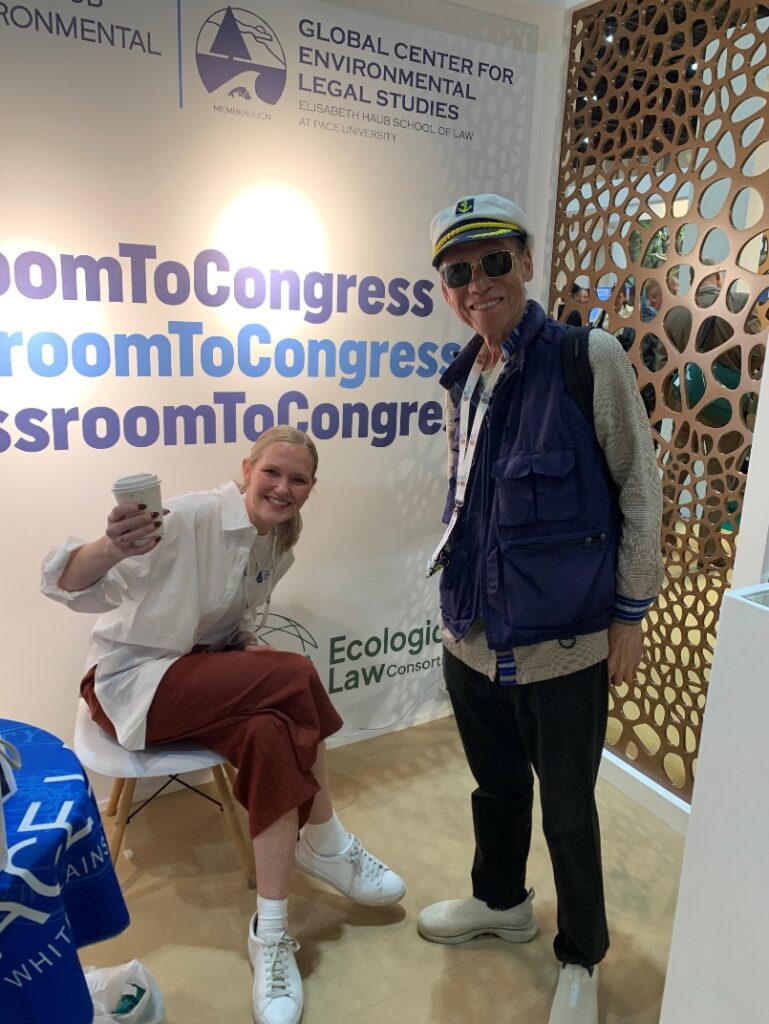
Antonio Oposa Jr. also attended the WCC with the CEL delegation (in the photo above with Pace Haub JD ’25 Madison Routledge Pettus).
Through the support of CEL, the cohort attended the World Conservation Congress in person, enabling these young professionals to meaningfully participate in global environmental governance and partake in key negotiations surrounding their motions.
The cohort also hosted a deep dive session at Congress entitled “From Classroom to Congress: Engaging Youth in the Making of International Environmental Policy,” where they discussed their experience in the motions development process and encouraged IUCN members to foster youth engagement in policymaking.
The success of each of these motions reflect months of sustained research, coalition building, and negotiations. It also demonstrates the meaningful role that emerging environmental law professionals can play in shaping conservation priorities on local and global levels. CEL’s engagement at the 2025 World Conservation Congress underscores its commitment to advancing ecological law through inclusive, youthled approaches that translate legal scholarship into tangible international impact.
Key Takeaways from the IUCN 2025 World Conservation Congress
At a time marked by geopolitical fragmentation and rising nationalism, the IUCN 2025 World Conservation Congress offered a powerful reaffirmation of multilateral environmental governance. During the Members’ Assembly, IUCN adopted a new 20-year strategic vision and the IUCN Programme 2026-2029, which outline the overarching direction for conservation efforts among IUCN and its members.
The newly adopted frameworks focus on four key areas:
- Scaling inclusive conservation across ecosystems,
- Mainstreaming nature within transformative sectors,
- Embedding equity and rights based approaches, and
- Linking ecological outcomes with social justice and human wellbeing.
Together, these priorities signal a shift away from siloed environmental protection and towards an intersectional, rights based approach, recognizing the interconnectedness of biodiversity, climate resilience, and human rights.
IUCN Members also adopted 144 Resolutions and Recommendations, addressing a wide range of critical environmental issues, including biodiversity protection, ecosystem restoration, recognition of Indigenous rights, the spread of zoonoses, the first IUCN policy on synthetic biology in relation to nature conservation, the recognition of ecocide as a crime, and new measures to strengthen governance and inclusion across the Union
One of the key motions adopted by the Members Assembly was Motion 141: Welcoming the International Court of Justice Advisory Opinion on climate change. Through this motion, IUCN members recognized States’ obligations in respect to climate change, requested IUCN’s Director General and the World Commission on Environmental Law to study the implementation of the ICJ’s findings, and urged IUCN members to take appropriate actions to implement such measures.
The motions adopted at the IUCN 2025 World Conservation Congress underscore the importance of collective action to address environmental challenges. However, the success of the Congress hinges on the actual implementation of these motions. As the international community confronts accelerating biodiversity loss and climate impacts, the IUCN Congress framed that the future of conservation lies in equity driven, cross sectoral, and globally coordinated action. This Congress was the largest gathering in IUCN history bringing together around 10,000 participants on-site and online, 140 booths and pavilions and 1,000 events.
Importantly, CEL members participated in meetings with International Renewable Energy Agency representatives at their headquarters in Abu Dhabi to discuss working together towards ensuring that conservation and biodiversity is prioritized as renewable energy development continues to expand globally as part of a just energy transition.
See below, photo of CEL’s delegation to IRENA, left to right: Michael Hamersky, Victor M. Tafur, Antonio Oposa Jr., Shakeel Kazmi and Jinlei Feng, our host at IRENA.
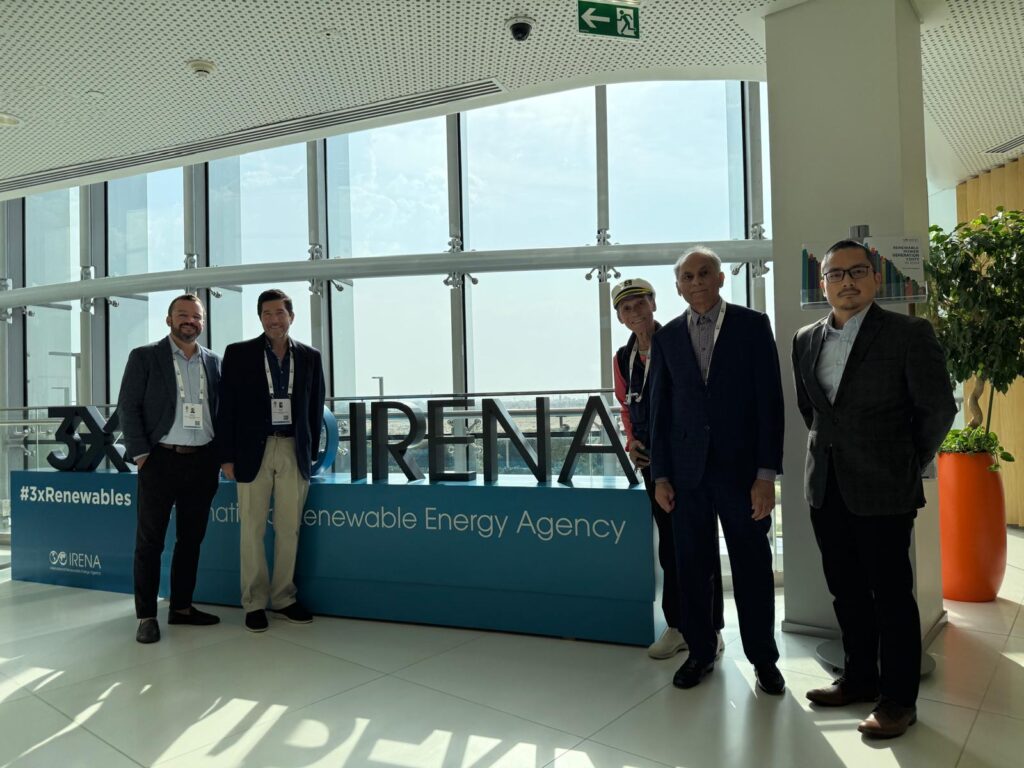
CEL’s Delegation to IRENA
Michael Hamersky, Victor M. Tafur, Antonio Oposa Jr., Shakeel Kazmi, and Jinlei Feng (Host at IRENA).
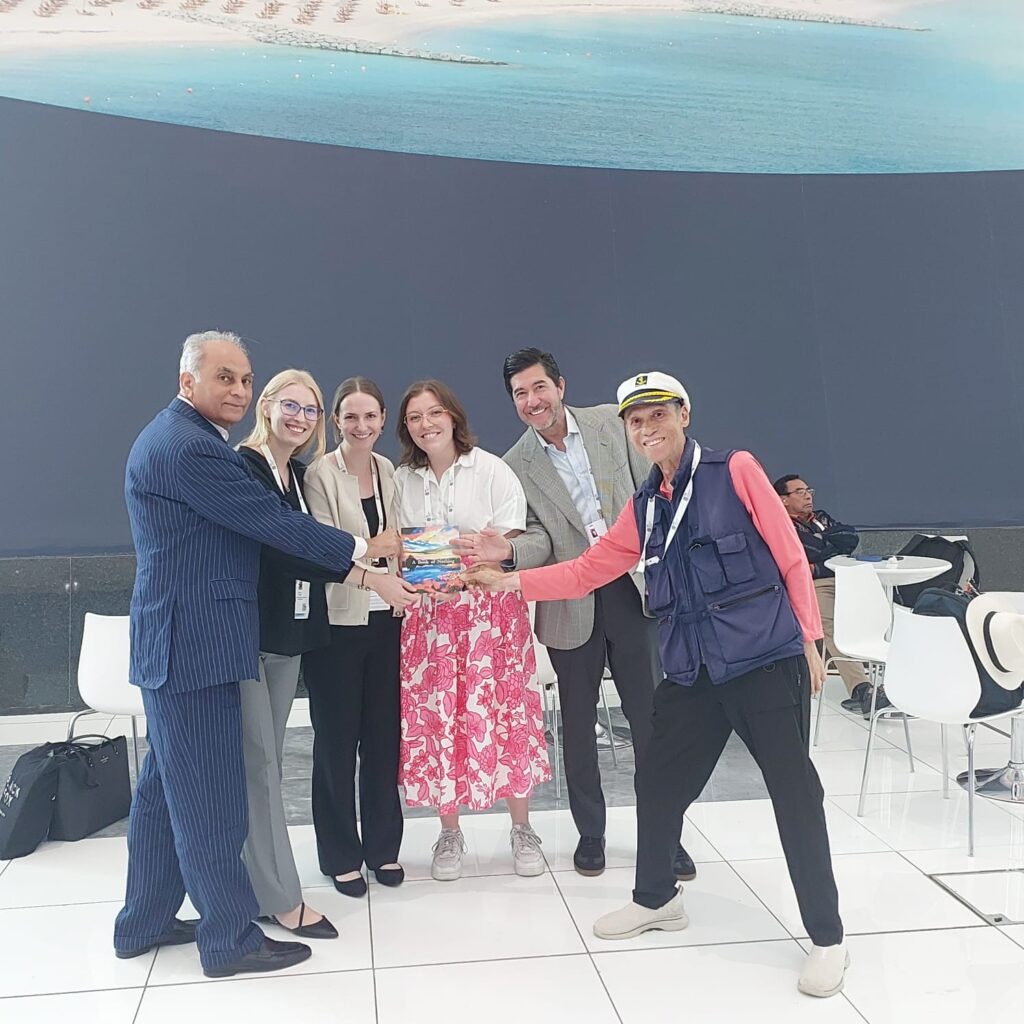
CEL’s In Person Delegation to the 2025 IUCN World Conservation Congress (UAE)
Professors Shakeel Kazmi and Victor M. Tafur with Antonio Oposa Jr. and Pace Haub law students.