
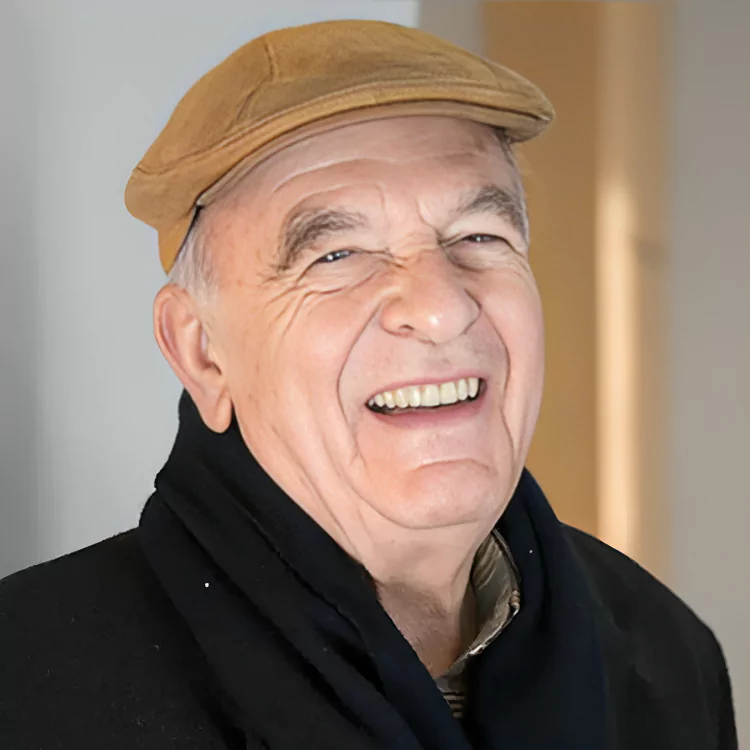
Richard L. Ottinger – An Eulogy by Narinder Kakar
We have heard so far as to how Dick helped transform energy efficiency and renewable energy from niche policy ideas into mainstream tools for environmental protection and climate action worldwide.
I wish to talk about the international impact Dick was able to make through advancing renewable energy, energy-efficiency law, climate-change mitigation, and environmental legal education worldwide. Dick helped shape global approaches to sustainable energy and environmental governance through UNEP, IUCN, Friends of the Earth, the Environmental and Energy Study Institute, and Pace University’s environmental law programs.
Dick vigorously pursued making contributions to the cause of international cooperation on sustainable development that characterized his leadership, founding the South American programs of the Peace Corps in the administration of President John F. Kennedy, focusing on the issue of energy conservation on the one hand, and on developing renewable sources of energy.
Apart from his advocacy of environmental and energy efficiency issues in the United States, Dick actively participated in the work of various international organizations like, e.g. the International Union for Conservation of Nature (IUCN). I first came in touch with Dick at the meeting of the Governing Council of IUCN in 2007, after having assumed my functions as its Permanent Observer to the UN. At the IUCN Governing Council, Dick made an impassioned appeal for IUCN to assume greater role in the area of energy conservation and supporting work for renewable sources of energy, an area which had not received much attention until then. Because of his expertise in and passion for energy conservation, Dick was asked to lead IUCN’s Environmental Law Commission’s work on sustainable energy law.
Dick published more than ten books on sustainable energy law, inter alia, with UN Environment Programme (UNEP) and IUCN. Because of Dick’s passion in and commitment for energy conservation, he was asked by the UN Environment Programme (UNEP) to conceptualize and develop the framework of UNEP’s Handbook for Drafting Laws on Energy and Renewable Energy Resources. The Handbook Book was published by UNEP in 2007 with Dick as the lead editor. Similarly, the Cambridge University Press published the Compendium of Laws on Energy for Sustainable Development in 2005, conceptualized by Dick, who served as its lead editor with Adrian Bradbrook and Wang Xi. Prof. Nicholas Robinson and Victor Tafur also served as contributors. With its emphasis on adaptation to local country needs and conditions, this handbook describes key environmental issues associated with efficiency and renewable energy resources, presenting legislative options for both developed and developing countries for dealing with them.
Some of the other publications for which Dick provided the lead in conceptualizing and editing are:
– The Law of Energy for Sustainable Development, Cambridge University in 2005 with Adrian Bradbrook, Rosemary Lyster and Wang Xi as editors.
– Energy Law and Sustainable Development published by ICUN in 2003 with Adrian Bradbrook as the co-editor).
– The Law of Energy for Sustainable Development by Cambridge University in 2004 with Dick as the Co-author).
– Energy Law and Sustainable Development co-authored by Dick for ICUN in 2003.
Dick collaborated closely with Prof. Wang Xi of Kunming University of Science and Technology in China. Dick and Prof. Wang Xi co-authored a book that compares efforts to curb air pollution in two of the world’s largest urban area viz. Los Angeles and Beijing. The book A Tale of Two Cities: A Comparison of Air Pollution Governance in Los Angeles area in the USA and the Beijing -Tianjin-Hebei Area of China was more than eight years in the making.
I should also acknowledge here that Dick contributed a thought-provoking chapter on Accelerating the Energy Transformation to the book FULFILLING THE SUSTAINABLE DEVELOPMENT GOALS in 2021 which Nick Robinson and I co-edited. And Dick provided a very supportive Foreword to my book PATHWAYS TO SUSTAINABLE DEVELOPMENT published last year.
Dick supported the work of IRENA, the International Renewable Energy Agency based in Abu Dhabi and participated in many of its meetings along with a number of Pace faculty and students. Given his expertise, he was invited to lecture at the annual meetings of IRENA. He also participated in a number of meetings of the Conference of the Parties (COPs) of the UN Framework Convention on Climate Change. His final address was to the Climate Summit held in Belem Brazil in November 2025.
I could go on and on and describe his rich contributions to many events and protocols, but because of paucity of time, would like to describe my and my wife’s friendly relationship with Dick, and of course with June. My wife and I have had the pleasure of being hosted by Dick and of course June for periodic lunches at their mansion in Mamaroneck on Long Island Sound. We were supposed to have lunch with him and June, and the Robinsons to celebrate Dick’s and Nick’s birthdays that fall within a couple of days of each other’s in January. Unfortunately, we had to cancel that lunch because of inclement weather. Sadly that deprived us an opportunity to spend time with him, as he passed away a few days thereafter.
I will conclude by reciting a short poem that Prof. Wang Xi composed in classic Chinese style, honoring Dick. He titled this poem : In Memory of Prof. Richard L. Ottinger dated February 17th, 2026:
Three decades we worked with heart sincere,
In mutual ease and cheer,
Though thoughts might veer,
Our joint work published, then you left this sphere.
How can one hand clap? Sorrow knows no bounds.
Richard L. Ottinger
We have heard so far how Dick helped transform energy efficiency and renewable energy from niche policy ideas into mainstream tools for environmental protection and climate action worldwide.
I wish to talk about the international impact Dick was able to make through advancing renewable energy, energy-efficiency law, climate-change mitigation, and environmental legal education worldwide. Dick helped shape global approaches to sustainable energy and environmental governance through UNEP, IUCN, Friends of the Earth, the Environmental and Energy Study Institute, and Pace University’s environmental law programs.
Dick vigorously pursued contributions to the cause of international cooperation on sustainable development that characterized his leadership, founding the South American programs of the Peace Corps in the administration of President John F. Kennedy, focusing on the issue of energy conservation on the one hand, and on developing renewable sources of energy on the other.
Apart from his advocacy of environmental and energy-efficiency issues in the United States, Dick actively participated in the work of various international organizations — for example, the International Union for Conservation of Nature (IUCN). I first came in touch with Dick at the meeting of the Governing Council of IUCN in 2007, after having assumed my functions as its Permanent Observer to the UN. At the IUCN Governing Council, Dick made an impassioned appeal for IUCN to assume a greater role in the area of energy conservation and to support work for renewable sources of energy — an area which had not received much attention until then. Because of his expertise in and passion for energy conservation, Dick was asked to lead the IUCN Environmental Law Commission’s work on sustainable energy law.
Dick published more than ten books on sustainable energy law, inter alia with the UN Environment Programme (UNEP) and IUCN. Because of Dick’s passion for and commitment to energy conservation, he was asked by UNEP to conceptualize and develop the framework of UNEP’s Handbook for Drafting Laws on Energy and Renewable Energy Resources. The Handbook was published by UNEP in 2007 with Dick as the lead editor. Similarly, Cambridge University Press published the Compendium of Laws on Energy for Sustainable Development in 2005, conceptualized by Dick, who served as its lead editor with Adrian Bradbrook and Wang Xi. Prof. Nicholas Robinson and Victor Tafur also served as contributors. With its emphasis on adaptation to local country needs and conditions, this handbook describes key environmental issues associated with efficiency and renewable energy resources, presenting legislative options for both developed and developing countries.
Some of the other publications for which Dick provided the lead in conceptualizing and editing are:
- The Law of Energy for Sustainable Development, Cambridge University Press, 2005 — with Adrian Bradbrook, Rosemary Lyster, and Wang Xi as editors.
- Energy Law and Sustainable Development, published by IUCN in 2003 — with Adrian Bradbrook as co-editor.
- The Law of Energy for Sustainable Development, Cambridge University Press, 2004 — with Dick as co-author.
- Energy Law and Sustainable Development, co-authored by Dick for IUCN in 2003.
Dick collaborated closely with Prof. Wang Xi of Kunming University of Science and Technology in China. Dick and Prof. Wang Xi co-authored a book comparing efforts to curb air pollution in two of the world’s largest urban areas — Los Angeles and Beijing. The book, A Tale of Two Cities: A Comparison of Air Pollution Governance in the Los Angeles Area of the USA and the Beijing–Tianjin–Hebei Area of China, was more than eight years in the making.
I should also acknowledge that Dick contributed a thought-provoking chapter on Accelerating the Energy Transformation to the book Fulfilling the Sustainable Development Goals (2021), which Nick Robinson and I co-edited. And Dick provided a very supportive Foreword to my book Pathways to Sustainable Development, published last year.
Dick supported the work of IRENA, the International Renewable Energy Agency based in Abu Dhabi, and participated in many of its meetings along with a number of Pace faculty and students. Given his expertise, he was invited to lecture at IRENA’s annual meetings. He also participated in a number of meetings of the Conference of the Parties (COPs) of the UN Framework Convention on Climate Change. His final address was to the Climate Summit held in Belém, Brazil, in November 2025.
I could go on and describe his rich contributions to many events and protocols, but because of the paucity of time, I would like to describe my and my wife’s friendly relationship with Dick, and of course with June. My wife and I have had the pleasure of being hosted by Dick and June for periodic lunches at their home in Mamaroneck on Long Island Sound. We were supposed to have lunch with him and June, and the Robinsons, to celebrate Dick’s and Nick’s birthdays, which fall within a couple of days of each other in January. Unfortunately, we had to cancel that lunch because of inclement weather. Sadly, that deprived us of an opportunity to spend time with him, as he passed away a few days thereafter.
I will conclude by reciting a short poem that Prof. Wang Xi composed in classic Chinese style, honoring Dick. He titled it “In Memory of Prof. Richard L. Ottinger,” dated February 17th, 2026:
Three decades we worked with heart sincere,
In mutual ease and cheer,
Though thoughts might veer,
Our joint work published, then you left this sphere.
How can one hand clap? Sorrow knows no bounds.
I think we all share Prof. Wang Xi’s feelings, and thank God that our lives were touched by a visionary like Dick Ottinger.